Winter Burn on Evergreens: Protecting Arborvitae, Yews, and Spruce
Evergreens keep losing water all winter, even when the ground is frozen and their roots cannot replace it. That is how a healthy-looking arborvitae ends up brown by spring.
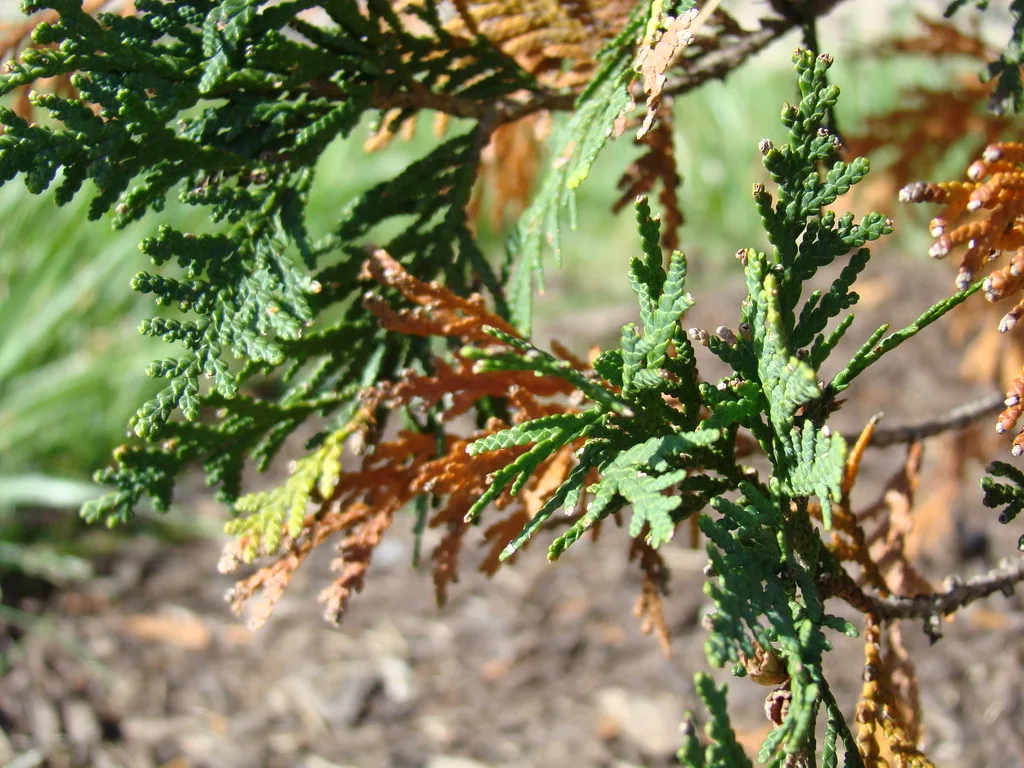
Every spring, homeowners in Wheaton and the western suburbs find that an arborvitae hedge or a row of yews has turned brown on one side. The damage showed up in March, but it built over the winter, and the best chance to limit it comes in November. Winter burn, also called winter desiccation, is one of the most common reasons evergreens look rough in spring. Some of it can be prevented with a few simple steps before the ground freezes.
Evergreen foliage stays on the plant all winter and keeps losing moisture, especially on sunny, windy days. When the soil is frozen, the roots cannot take up water to replace what the needles and scales lose. The foliage dries out and dies. The browning often does not appear until late winter or early spring, when warmer days arrive, which is why the cause gets missed. Sun reflecting off snow and wind sweeping across open ground both make it worse.
Arborvitae, yews, boxwood, and young spruce and pine are the plants we see affected most often. Where a plant sits matters as much as what it is. The south and west sides of a plant get the most winter sun. Evergreens on the windy side of a house, along an open lot, or next to a driveway where plows throw salty snow take the most stress. Evergreens planted in the last year or two are the most vulnerable, because their roots have not spread far enough to find water.
The most useful step is a deep watering before the soil freezes, especially after a dry fall. Run a hose slowly at the base so the water soaks 8 to 12 inches down instead of running off, and repeat every week or two until the ground freezes. A layer of mulch 2 to 3 inches deep, pulled back a few inches from the trunk, helps the soil hold that moisture and slows how quickly it freezes.
For plants in exposed spots, a burlap screen helps. Set a few stakes in the ground before it freezes and attach burlap to them a few inches away from the plant, on the side that faces the wind or the afternoon sun. Wrapping burlap tightly around the plant itself can trap moisture against the foliage and rub it raw, so a screen is usually the better choice. Skip plastic, which heats up in the sun. Take the screen down in early spring.
Garden centers sell anti-desiccant sprays that coat foliage to slow moisture loss. Research results on them are mixed. If you use one, apply it on a day above freezing and follow the label closely. It does not replace watering.
If an evergreen does brown this winter, do not rush to cut it back in March. On many evergreens the buds survive even when the foliage around them has died. Wait until new growth starts in late spring, then prune out only what stayed brown. Yews usually recover well because they can grow back from older wood. Arborvitae and junipers do not regrow from bare wood, so a badly burned section may stay thin. A plant that burns every winter may simply be in the wrong spot.
Klein Creek Tree Care helps homeowners in Wheaton, Glen Ellyn, and surrounding communities keep their trees and evergreens healthy through the winter. If an evergreen screen browned last spring, or you are not sure whether a tree is worth protecting, request an estimate and we can take a look before the ground freezes.
Worried about your evergreens this winter?
Klein Creek Tree Care LLC provides tree health assessments, pruning, and tree planting for homeowners in Wheaton, Glen Ellyn, and surrounding communities.