Why Topping Your Trees Does More Harm Than Good
Topping looks like a quick fix for a tree that has gotten too big, but it sets off a chain of problems that leave the tree weaker, riskier, and uglier than before. Here is what topping actually does and what to ask for instead.
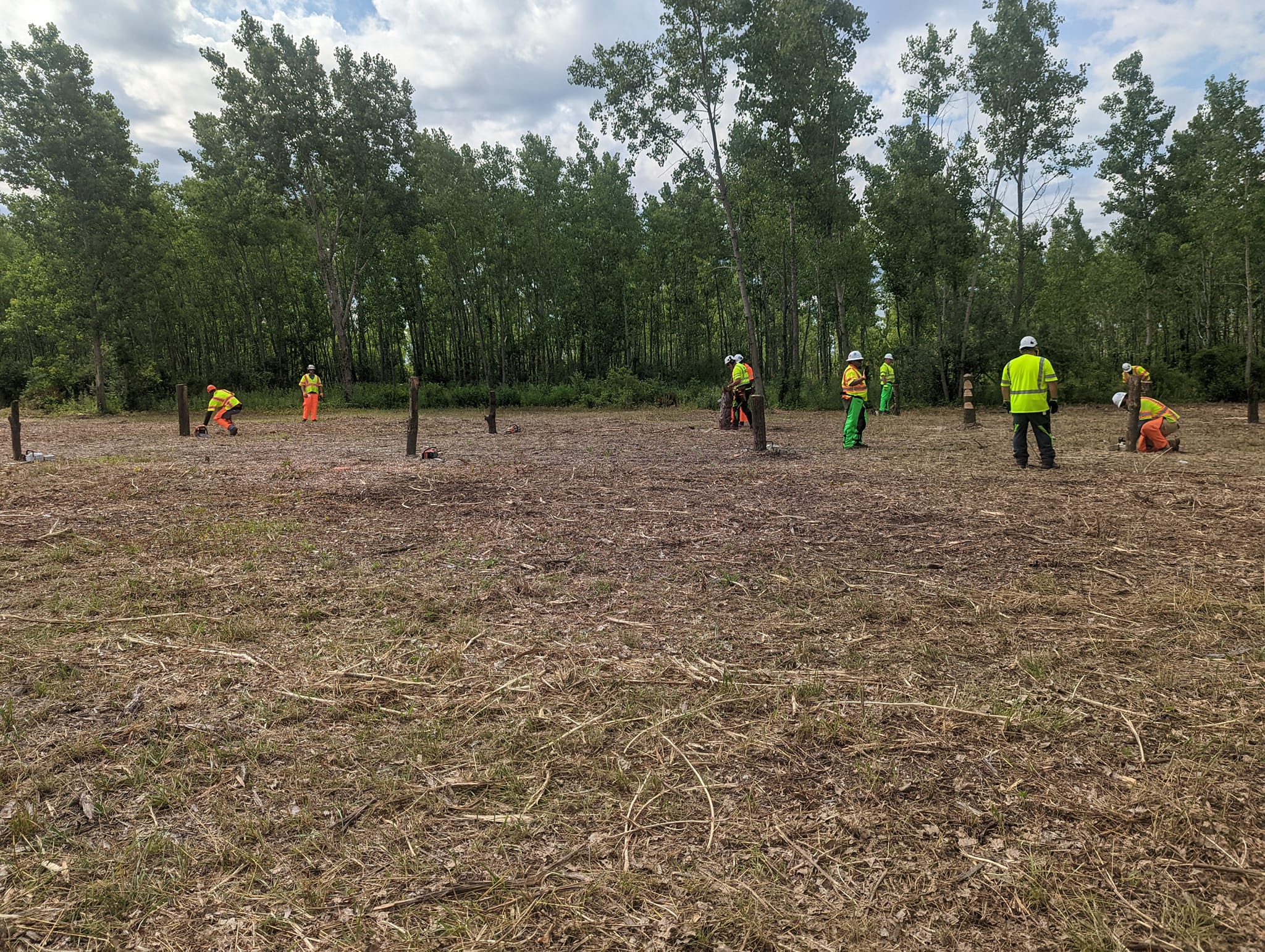
Topping is the practice of cutting a tree's main branches back to stubs, lopping off the upper canopy to bring the height down in one shot. It is still one of the most commonly requested tree jobs, usually from a homeowner who feels a tree has outgrown its spot, or who worries that a tall tree near the house is a hazard waiting to happen. The instinct is understandable. The problem is that topping does not make a tree shorter in any lasting way, and it does not make it safer. It trades a manageable concern for a set of new ones that are harder and more expensive to fix.
Start with what the cut does to the tree biologically. A tree's leaves are its food factory, and the canopy is sized to feed the trunk and roots below it. When you remove a large share of the canopy at once, you starve the tree of the energy it needs to defend itself and grow. The tree responds the only way it can, by throwing out a burst of fast, vigorous shoots just below the cuts in a desperate attempt to replace the lost leaf area. Those shoots are not normal branches. They grow quickly, they are weakly attached to the outside of the old wood, and they form a dense, bushy crown that is far more prone to breaking than the original limbs were.
That weak attachment is the heart of the safety problem. A branch that grows naturally is anchored deep in the wood of the parent limb. The watersprouts that erupt after topping are anchored only in the thin layer of new growth around the wound. Within a few years they can be long and heavy, and they snap or tear out under wind and ice far more readily than the structure they replaced. So a tree topped because it seemed risky often becomes genuinely more dangerous within three to five years, just as the new growth regains the original height.
The wounds themselves are another lasting cost. A proper pruning cut is made at a branch union, where the tree can wall the wound off and seal over it. A topping cut leaves a large stub in the middle of a limb, with no natural boundary to close. Those big, exposed cuts are slow or impossible to seal, and they become open doors for decay fungi and insects. Internal rot then spreads down into the limb and trunk, hidden under the flush of green regrowth, hollowing out the very wood the heavy new shoots depend on. A topped tree can look bushy and healthy on the surface while quietly decaying underneath.
There is a financial angle too. Topping is sold as cheap, but it commits you to a cycle. The regrowth comes back fast, so the tree needs cutting again every few years, and each round of stubs adds more decay and more weak shoots. Meanwhile a tree that has been topped loses much of its value as a landscape asset; the natural form is gone, replaced by a knuckled, witch's-broom silhouette that no amount of later pruning fully restores. If decay eventually forces removal, you pay to take down a larger, more compromised tree than you started with.
None of this means a large tree near your home has to stay exactly as it is. The right tool is crown reduction, not topping. In a proper reduction, an arborist shortens limbs by cutting back to a living lateral branch large enough to take over as the new leader of that limb. The tree keeps a natural shape, the cuts are small enough to seal, and the height or spread comes down without triggering the panic regrowth. Reduction is more skilled and more selective than topping, which is exactly why it works; it respects how the tree grows instead of fighting it.
If the real worry is risk rather than size, the answer is usually an assessment rather than a chainsaw. Many tall trees that make owners nervous are structurally sound and need only minor pruning, while the ones that are genuinely hazardous have specific defects, such as cracks, decay, or weak unions, that targeted work or removal addresses far better than topping ever could. A tree that is the wrong species for its location, and truly too big for the space, is often better removed and replaced with something appropriately sized than topped repeatedly for the rest of its shortened life.
The short version is this: topping does not solve the problem people hope it will, and it creates several that are worse. If a tree on your property feels too tall, too close, or too risky, the better move is to have it looked at and pruned correctly, with reduction cuts where height needs to come down and honest advice where removal makes more sense. Done right, the tree stays attractive, stays structurally sound, and costs you less over its life than the cycle of topping ever would.
Need tree service?
Klein Creek Tree Care LLC helps residential and commercial properties with trimming, pruning, removals, tree health assessments, and safety-focused maintenance.