When to Call an Arborist vs a Landscaper
Arborists and landscapers overlap on the small jobs and diverge sharply on the important ones. Here is how to know which professional you actually need.
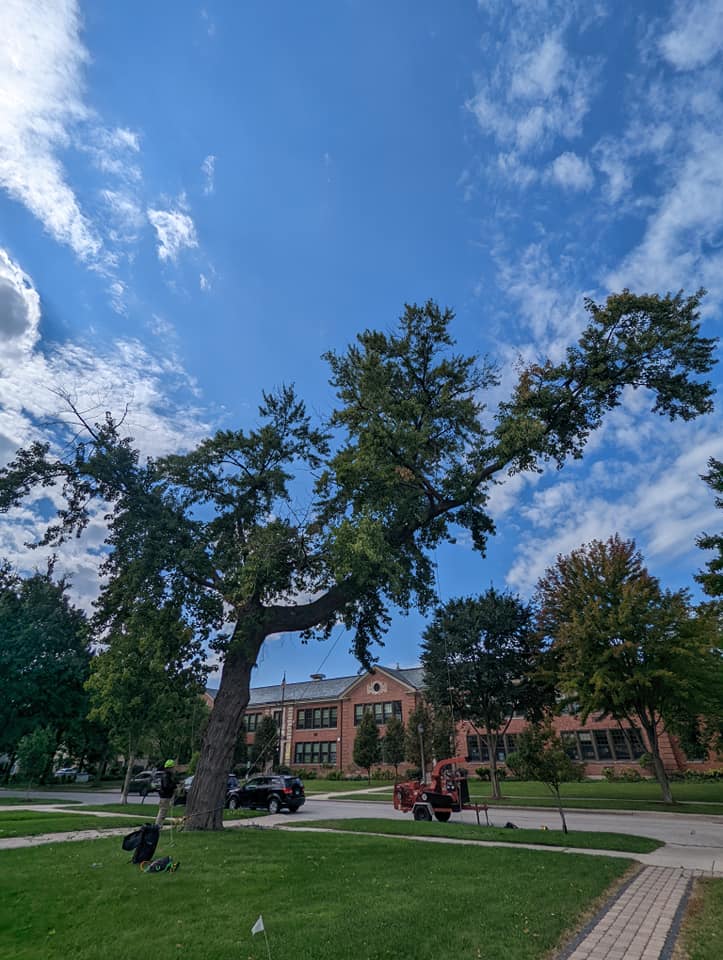
The most common service call we see, both in the yards we work in and in the questions we get from homeowners, starts with a confusion that costs money: the wrong professional was called first, the work was done at the wrong level, and now somebody has to come back and either redo it or work around what already happened. Knowing whether a job is an arborist job or a landscaper job before the phone gets picked up saves a surprising amount of time, money, and tree health.
A landscaping company is generally organized around the systems below the canopy: lawns, beds, irrigation, hardscape, drainage, and the seasonal work that keeps a property looking maintained. Most landscape crews do basic tree work as part of that, like trimming small ornamental trees, clearing brush, planting young trees from nursery stock, and managing the soil and turf around larger trees. They are usually the right call for anything that primarily involves the ground plane and the smaller, accessible parts of the landscape.
A tree-care company or arborist is organized around the trees themselves. The focus is structural pruning of larger trees, removals, hazard assessment, cabling and bracing, storm response, stump grinding, and the diagnostic side of figuring out why a tree is not doing well. The crews are equipped for climbing, rigging, and working with chainsaws at heights. The training is focused on tree biology, structural defects, and how to make cuts that the tree can actually heal.
The clearest dividing line is size. Anything that requires a ladder, climbing gear, a bucket truck, or rigging to lower limbs safely is arborist territory. The reason is not snobbery. It is liability and risk. A tree large enough to need real climbing and rigging is also large enough to put a crew member in the hospital if it is mishandled, and it carries enough insurance exposure that doing the job without an arborist-equipped company is a bad idea for everyone involved. A landscape crew with a chainsaw and good intentions can do real damage to both the tree and themselves in this category.
Diagnostic questions are also arborist territory. If you are asking why a tree is in decline, whether a leaning tree is safe, whether a co-dominant stem needs to be cabled, whether a fungal body on the trunk is a problem, whether construction damage two years ago is going to kill the tree, or whether two trees that look identical on the outside are actually different species, you are asking a question that an arborist can answer accurately and a generalist landscaper usually cannot. The answers drive thousands of dollars worth of decisions about whether to keep, treat, or remove the tree, so the price of an expert evaluation is almost always a bargain compared to the price of acting on a guess.
There is also a category that is genuinely shared. Planting and aftercare of newer trees, basic small-tree shaping, and general yard cleanup after a storm can be done well by either kind of crew. For that work, the right call usually depends on who is already on the property, who handles the rest of the maintenance, and who has a window in their schedule. The decision is more practical than technical.
The categories where calling the wrong professional causes problems are concentrated in two specific places: pruning of mature trees and decision-making about damaged or declining trees. A mature tree pruned by a generalist with a hedge trimmer or aggressive top-down cuts can take years to recover, if it recovers at all. A declining tree assessed by somebody without diagnostic training often gets either removed when it could have been saved or saved when it should have been removed. Both outcomes are expensive and avoidable.
A good rule of thumb is to call an arborist first whenever the work involves a tree more than about twenty feet tall, anything requiring climbing or rigging, anything diagnostic, anything storm-related on a large tree, anything within reach of power lines, and anything where the question is "should this tree stay or go." For the rest of the yard, a trusted landscape crew is usually the right call, and a good landscaper will often refer you to a specific arborist they have worked with rather than pretending the job is in their scope.
Need tree service?
Klein Creek Tree Care LLC helps residential and commercial properties with trimming, pruning, removals, storm cleanup, and safety-focused maintenance.