What to Do With Fallen Leaves Under Your Trees
Leaves are not just yard waste. Handled well, they protect roots and build soil; handled poorly, they smother turf or carry leaf disease into next spring.
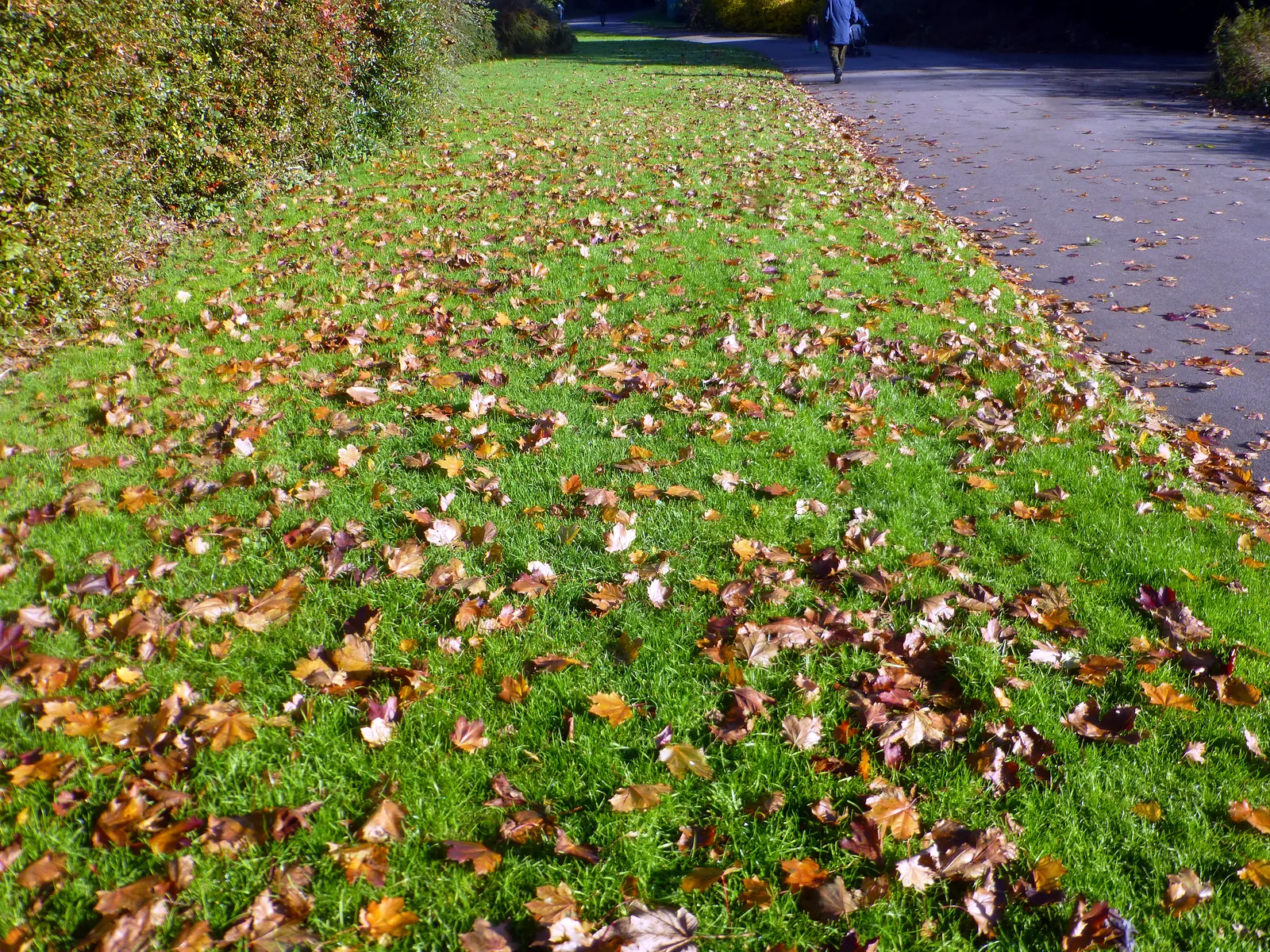
By mid-October, the trees around Wheaton are dropping leaves faster than most people can rake. The usual response is to bag everything and set it at the curb. That works, but it throws away a free resource. In a forest, fallen leaves break down into the organic layer that keeps soil loose, moist, and full of life, which is exactly what yard trees growing in compacted suburban soil tend to lack. The goal is to keep the benefits of leaves without letting them cause problems.
If the lawn has a thin to moderate covering of leaves, the mower can do most of the work. Run over them a few times with the bag off, or with a mulching blade, until the pieces are small enough to settle down between the grass blades. They break down over winter and add organic matter to the soil. This works best when you mow regularly through the season instead of waiting for a deep pile to build up. A thick, wet mat of whole leaves left on the lawn all winter is another matter: it blocks light and air and can leave dead patches in spring.
Shredded leaves make good mulch for planting beds and for the root zones of trees and shrubs. Spread a few inches over the soil, keeping it away from trunks and stems. Shredding matters, because whole leaves, especially large ones like maple, tend to mat together and shed water instead of letting it through. Oak leaves break down slowly and stay loose for a long time, which makes them useful as winter mulch once they are chopped. If you have more leaves than your beds can use, a simple compost pile turns them into soil amendment for next year.
Some leaves should leave the property. Several common leaf diseases spend the winter on fallen leaves and reinfect trees in spring, including apple scab on crabapples, tar spot on maples, and anthracnose on trees such as sycamore and ash. Raking up and removing leaves from affected trees reduces the amount of disease close by. It will not eliminate the problem, since spores also blow in from other yards, but it helps, particularly for trees that were hit hard this year. Do not use those leaves as mulch under the same trees.
Leaf drop is also a good moment to notice what the tree has been telling you. Leaves that fell in August, leaves with heavy spotting, unusually small leaves, or leaves that dropped from only one side of the crown can point to stress, disease, or root trouble. On a species that normally sheds cleanly, brown leaves that cling to one branch after the rest of the tree is bare can mark a limb that died during the season. Take a photo of anything unusual so you can compare it next year.
A few habits are worth avoiding. Do not pile leaves against trunks or in deep heaps over the root flare; constant moisture against bark invites decay, and the pile gives rodents a sheltered place to chew. Keep leaves out of storm drains and street gutters, where they clog drainage and wash nutrients into local streams. Burning leaves is restricted or prohibited in many communities, so check with your village or county before considering it, and use your municipality's yard waste collection for whatever you cannot use on site.
One special case is black walnut. Its leaves, husks, and roots contain a compound called juglone that can harm sensitive plants such as tomatoes. The compound breaks down over time and in a compost pile, but fresh walnut leaves are better kept out of vegetable gardens.
Leaf season is also a good time to look up. Once the canopy thins, dead limbs and old storm damage are much easier to see from the ground. Klein Creek Tree Care helps property owners in Wheaton, Glen Ellyn, and surrounding communities with pruning, deadwood removal, and tree health evaluations. If leaf drop showed you something that concerns you, ask for an estimate before winter.
Did leaf drop reveal a problem?
Klein Creek Tree Care LLC handles pruning, deadwood removal, and tree health evaluations in Wheaton, Glen Ellyn, and surrounding communities.