What to Do in the First 24 Hours After Summer Storm Tree Damage
A summer storm can leave broken limbs and split trees behind in minutes. Here is a calm, safe plan for the first 24 hours so you protect your family and your property in Wheaton.
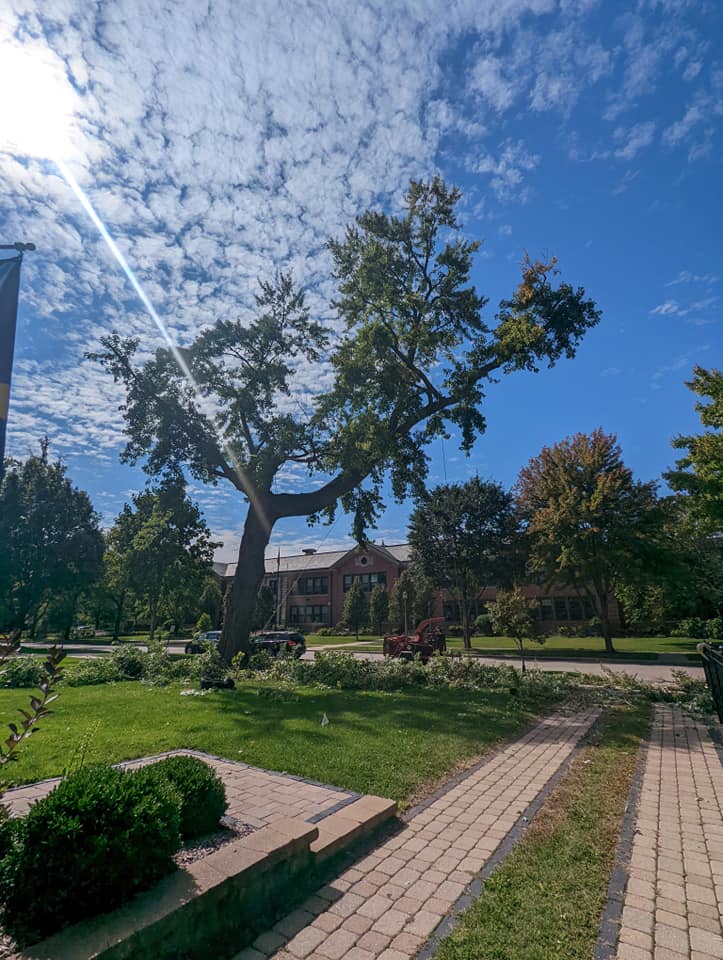
Summer storms move through Wheaton fast, and the damage they do to trees is often the last thing a homeowner is thinking about while the wind is still blowing. Once the storm passes and it is safe to step outside, the first day matters more than most people realize. What you do in those first 24 hours sets the tone for how safe your property stays, how much of the tree can be saved, and how smoothly any cleanup goes. The goal in that first day is not to fix everything. It is to stay safe, understand what you are looking at, and avoid making the situation worse.
Before you touch anything, look up and look around. The single most important safety rule after a storm is to keep well away from any downed or dangling wires, and to assume every line on the ground is live until the utility says otherwise. If a limb or a whole tree has fallen onto a power line, on your home, or across a road, that is not a job to inspect up close. Keep people and pets back, and call the utility and, if there is any immediate danger, emergency services. A branch caught in a line can energize a whole tree, and a partially fallen tree can shift without warning.
Once you have confirmed the area is clear of electrical hazards, do a slow walk-around from a safe distance and take note of what you see. Look for limbs that have broken but are still hanging in the canopy, which arborists call hangers, because these can drop long after the wind is gone. Look for splits where a branch has torn away from the trunk, for trees leaning more than they did yesterday, and for soil that has heaved or cracked around the base, which can mean the roots have started to lift. Photograph everything from several angles. Those photos help an arborist understand the damage and are exactly what your insurance company will want if you end up filing a claim.
It is tempting to grab a chainsaw and start cutting, but the first 24 hours is the wrong time for a homeowner to be doing overhead work. Storm-damaged limbs are under tension and load in ways that are hard to read, and a branch that looks settled can snap back or roll when it is cut. The most dangerous work — anything overhead, anything near wires, anything involving a ladder or a tree that is leaning or split — should wait for a professional crew with the right equipment. What you can safely do is clear small, loose debris on the ground that is not tangled in anything larger, and pull it away from walkways and driveways so no one trips.
You can also do a few practical things that protect your property while you wait for help. Rope off or block access to the area under any hanging limbs so no one wanders beneath them. Move vehicles out from under damaged trees. If a limb has broken but not fallen and it is threatening something valuable, note it for the crew rather than trying to bring it down yourself. Keep your list of damage and your photos together in one place so you can hand them over quickly. Trees that are leaning, split at the trunk, or dropping limbs over a house are the ones that need attention first, and flagging them clearly speeds up the response.
When you call a tree care company in the aftermath of a storm, be ready to describe what you are seeing so they can prioritize the urgent hazards. A good crew will assess which trees are an immediate danger and need to be secured or removed right away, and which have damage that can be pruned and repaired so the tree survives. Not every storm-damaged tree in Wheaton has to come down; many can be saved with the right cuts made at the right time. Getting a knowledgeable eye on the property in that first day is what makes the difference between a safe, orderly recovery and a second problem down the road.
Need tree service?
Klein Creek Tree Care LLC helps residential and commercial properties with trimming, pruning, removals, tree health assessments, and safety-focused maintenance.