What Happens to the Wood and Debris After a Tree Removal
A removed tree leaves behind logs, brush, chips, and a stump. Here is what actually happens to all that material, what your options are, and what to settle before the crew arrives.
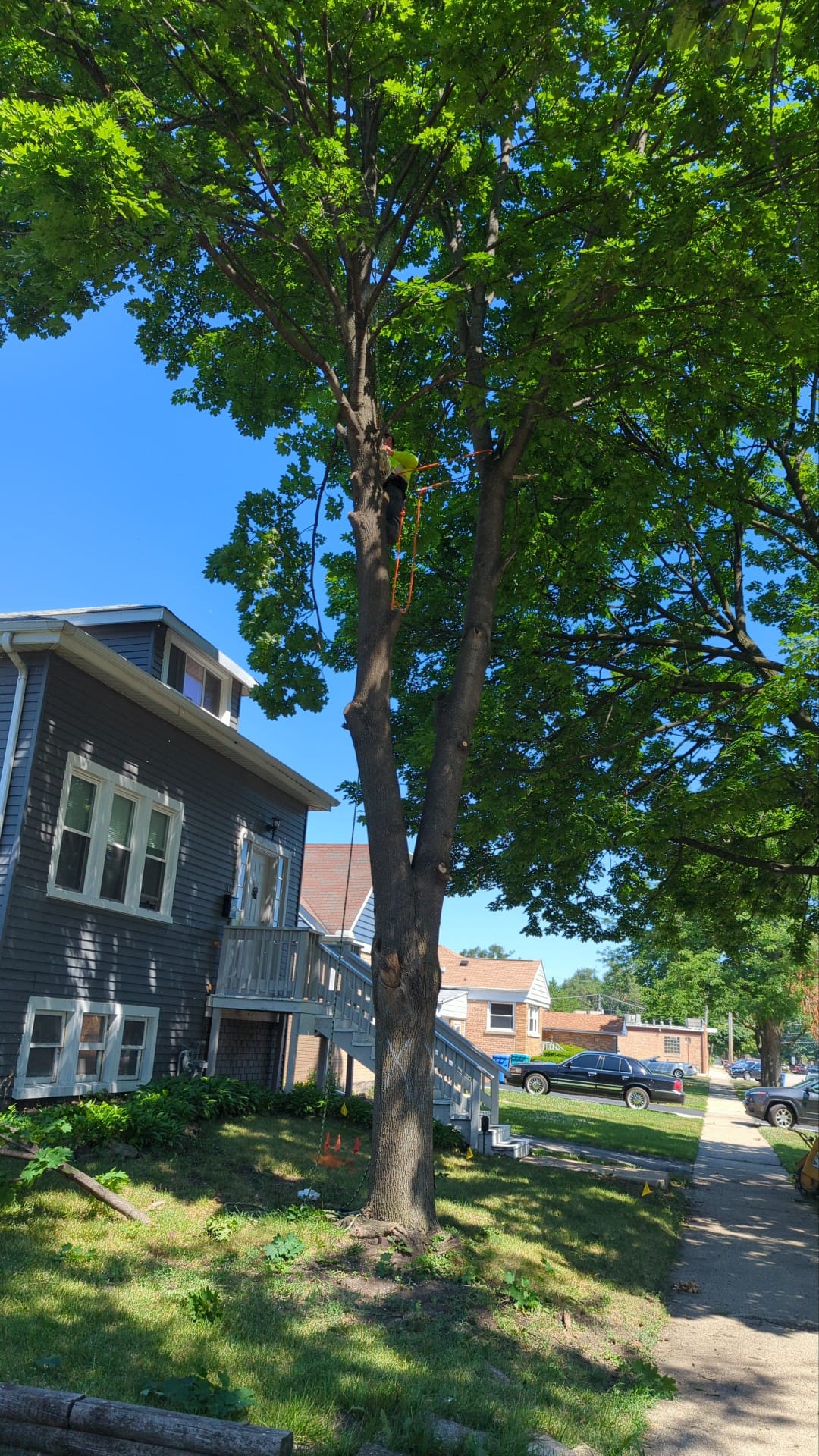
Most people focus on the moment the tree comes down and give little thought to what is left over. But a mature tree is a remarkable amount of material, and once it is on the ground it has to go somewhere. A single large tree can produce several truckloads of wood, brush, and chips. Understanding where all of that goes, and deciding ahead of time how much of it you want hauled away, is one of the parts of a removal that homeowners most often get surprised by. The cleanup is not an afterthought; it is a real share of the labor and the cost.
The tree separates into a few distinct categories of material as it comes down, and each is handled differently. First is the trunk and the larger limbs, the solid wood. Second is the brush: the smaller branches, twigs, and leafy material, which is bulky but light. Third is whatever gets run through the chipper, producing wood chips. And finally there is the stump and the root system left in the ground, which is a separate job with its own equipment. A clear quote spells out what happens to each of these, because the difference between hauling everything off and leaving some of it on site can change both the price and what your yard looks like afterward.
The brush is almost always the first thing dealt with, and it usually goes straight into a chipper. A chipper turns piles of branches into a compact stream of wood chips, which dramatically reduces volume and makes the material easy to transport. Those chips have real value. They make excellent mulch for garden beds and pathways, and many homeowners ask the crew to leave a pile on site for exactly that purpose. If you do not want them, the chips go with the crew, often to be used as mulch elsewhere, spread on trails, or processed at a yard-waste facility. It is always worth asking, because a free load of fresh mulch can save you a trip to the garden center.
The solid wood from the trunk and large limbs has more options. It can be cut into rounds and hauled away, or it can be left stacked on your property as firewood, which many people request to save on both removal cost and heating wood. If you want firewood, say so before the work starts, because the way the crew bucks the trunk into manageable lengths depends on knowing that in advance. Some larger or higher-quality logs may be suitable for milling into lumber, and a few tree services or local sawyers will take desirable hardwood logs for that purpose. Whatever is not kept on site is hauled to a recycling yard, where it is typically ground into mulch or processed for biomass rather than sent to a landfill.
The stump is its own decision. Cutting the tree down leaves a stump and the root system still in the ground, and removing it is a separate operation, usually done with a stump grinder that chews the stump down below grade. Grinding produces a pile of mixed wood chips and soil that fills the hole, and you can choose to spread that material, have it hauled, or top it with soil and reseed. Some homeowners leave the stump entirely, which is cheaper but means living with the stump and, eventually, the sprouts and decay fungi that come with it. Where you want the grindings to end up, and how deep you want the grinding to go if you plan to replant, are worth deciding up front.
The reason all of this matters before the crew arrives is that cleanup scope is one of the biggest variables in a removal quote, and one of the most common sources of disappointment when it is not discussed. A bid to drop a tree and leave the wood on site is a very different number from a bid to remove every trace and rake the area clean. Neither is wrong, but they need to match what you actually expect to see when the trucks pull away. Ask specifically: Are the chips staying or going? Is the trunk being hauled or stacked as firewood? Is the stump being ground, and where do the grindings go? Is the area being raked and cleaned at the end?
Handled well, almost nothing from a removed tree truly goes to waste. The brush becomes mulch, the trunk becomes firewood or lumber or ground material, and the stump grindings fill the hole they came from. A good crew will walk you through these choices as part of the estimate rather than leaving you to discover them when a pile of logs is sitting in your driveway. Knowing the options ahead of time lets you decide what to keep, control the cost, and avoid surprises on the day of the work.
Need tree service?
Klein Creek Tree Care LLC helps residential and commercial properties with trimming, pruning, removals, tree health assessments, and safety-focused maintenance.