Summer Branch Drop: Why Healthy-Looking Limbs Fall on Calm Days
Every summer, large limbs break off seemingly sound trees on still, hot afternoons with no wind at all. Here is what is actually behind sudden summer branch drop and how to lower the odds on your property.
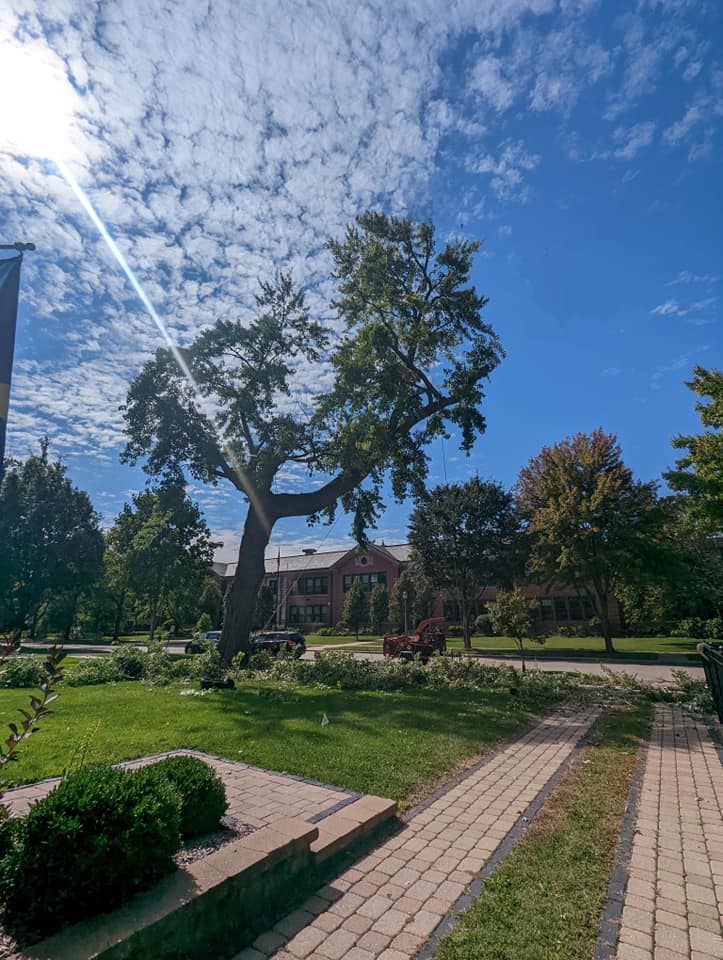
One of the most unsettling things a tree can do is drop a large, leafy, apparently healthy limb on a hot, windless afternoon. There is no storm, no gust, nothing obvious to blame, and yet a branch the size of a small tree lands across the lawn or the driveway. Arborists see a spike in these calls every summer, and the phenomenon is common enough to have a name: summer branch drop, sometimes called sudden limb failure. It is not random bad luck, and understanding what drives it helps you judge which of your trees deserve a closer look before the next heat wave.
The pattern is consistent. Summer branch drop tends to hit long, horizontal limbs on mature trees during the hottest, stillest part of the day, often in the early afternoon after several days of heat. The branch that fails is frequently one that looked perfectly fine, with a full canopy of green leaves, which is exactly why these failures feel so out of nowhere. The wood at the break is often solid, not rotten, which rules out the usual decay explanation that accounts for most other limb failures. Something else is going on, and it is tied directly to the heat and the season.
There is no single agreed-upon cause, but the leading explanations all point to the combination of summer conditions and limb geometry. Long horizontal limbs carry an enormous bending load just from their own weight, and that load is concentrated at the attachment point. In summer, those limbs are also loaded with a full flush of foliage and, after watering or humid nights, with moisture in the leaves and wood. On hot afternoons, rapid changes in the tree's internal water movement and gas content within the wood are thought to weaken the limb's resistance right when the static load is at its peak. The result is a quiet, sudden fracture with no wind required.
Certain trees and certain limbs are more prone to it than others. Species that naturally grow long, heavy, horizontal limbs are the usual subjects. A branch that extends far out over a lawn or a patio, with most of its weight and foliage concentrated at the far end, is mechanically the worst case: maximum leverage on the attachment. Limbs that have been over-thinned in the interior, leaving heavy tufts of growth only at the ends, are especially vulnerable because all the weight sits where it does the most damage. Mature and over-mature trees, with their largest limbs fully extended, account for most of these failures.
Because the wood is often sound, the standard decay inspection does not always flag these limbs in advance, which makes summer branch drop genuinely hard to predict. That said, there are warning signs worth watching for: very long, heavy horizontal limbs reaching out over a target, limbs with a noticeable downward sweep that has increased over the years, previous summer drops on the same tree or nearby trees of the same species, and end-weighted limbs that have been improperly pruned. A tree that has dropped a limb once in summer has shown its tendency, and the remaining long limbs deserve attention.
The practical management for high-risk limbs is to reduce the load rather than wait for the failure. End-weight reduction, where an arborist shortens the heaviest, longest limbs back to sound lateral branches, lowers the leverage at the attachment and is the most direct intervention. Proper crown reduction keeps the limb's natural form while cutting the bending stress. What does not help, and actively hurts, is topping or lion's-tailing, which either creates weakly attached regrowth or pushes even more weight to the branch tips. The goal is a balanced, shorter limb, not a stripped or stubbed one.
Placement matters as much as the tree. A long limb that fails over an empty corner of the yard is a cleanup job; the same limb over a patio, a parking spot, a play area, or a walkway used through the summer is a real hazard to people. When you have large horizontal limbs reaching over places where people gather in the heat, that is the situation worth having evaluated before the peak of summer. An arborist can identify the highest-leverage limbs, judge which ones warrant reduction, and prioritize the work so the trees stay both beautiful and safe through the hottest months.
If a tree on your property has long, heavy limbs stretched out over anything you care about, the calm weather of early summer is the right time to address them, not the aftermath of a failure. Summer branch drop will never be fully predictable, but the limbs most likely to fail share recognizable traits, and reducing their load is straightforward work for a trained crew. A short visit to assess and lighten the worst limbs is far cheaper than the repair, and the cleanup, that follows a large limb coming down on its own terms.
Need tree service?
Klein Creek Tree Care LLC helps residential and commercial properties with trimming, pruning, removals, tree health assessments, and safety-focused maintenance.