Setting a Tree Care Budget for the Year
A simple yearly tree-care budget helps homeowners avoid emergency bills, plan around growth cycles, and protect the value of mature trees.
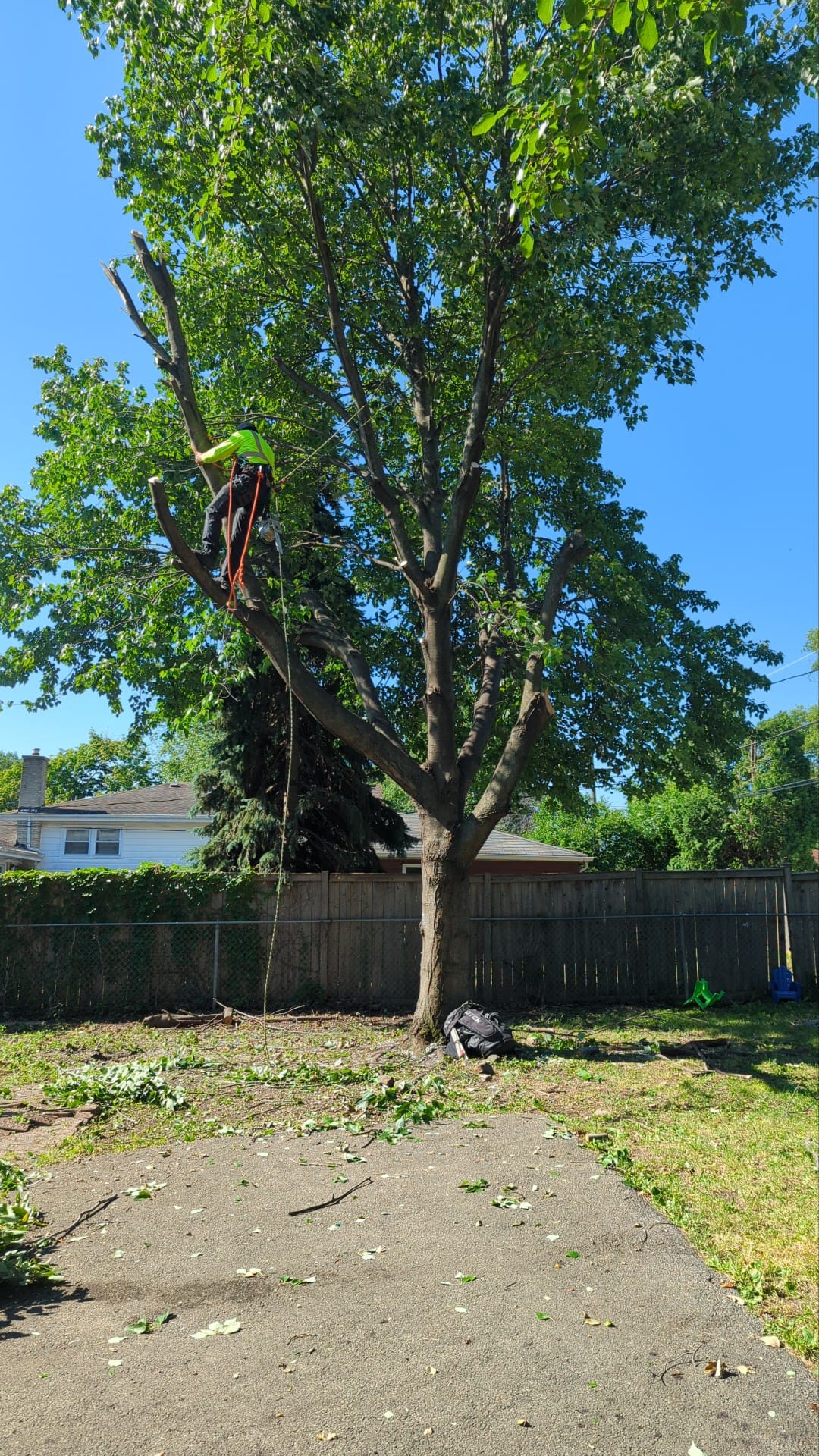
Most homeowners do not budget for trees. The lawn gets a number, the irrigation gets a number, the roof gets a number, and then the trees get whatever is left after a branch hits something. That order tends to produce the worst possible spending pattern, because emergency tree work is several times more expensive than planned tree work, and a single avoidable failure can blow through a year of planned maintenance and then some.
A useful tree-care budget starts with an honest inventory. Walk the property and list every tree larger than a sapling. For each one, note the species if you know it, the rough size, the position relative to the house and other targets, and any visible problems. Even a rough list is enough to think about cost intelligently. Twenty mature trees on a wooded lot will need a different budget than three young trees on a small lawn, and a budget that does not reflect that gets used up unevenly.
The first budget category most properties need is routine pruning. For a typical residential property with a handful of mature trees, this is a once-every-two-to-three-years line item per tree, not a yearly one. Set aside enough each year that, on a rolling basis, every mature tree gets touched at least once every three years. That schedule keeps deadwood, clearance, and structural problems in check without overpruning, and it spreads the work out so no single year takes the full hit.
The second category is inspection. A short walkthrough with an arborist once a year, ideally in late spring after leaf-out, catches problems early enough to be cheap. Inspections are usually one of the smallest line items in a tree budget and one of the highest-return. The cost of identifying a co-dominant stem with included bark and cabling it now is a fraction of the cost of cleaning up after that stem fails in a storm.
The third category is removal and replacement. Most properties have at least one tree on the medium-term radar. That might be a tree in decline, a species that is approaching the end of its useful life on the lot, or a tree positioned where it has become a long-term clearance problem. Even if no removal is planned this year, setting aside a small amount toward eventual removal turns a future emergency into a future scheduled job. Pair that with a small planting line for new trees that will grow into the role as older trees come down.
The fourth category is the contingency line, and it is the one most homeowners forget. Storms happen. A neighbor's tree falls into your yard. A utility crew has to clip back a limb that should have been clipped differently. A new fence requires temporary canopy work. Setting aside a modest cushion specifically for unplanned tree work means the rest of the budget does not get raided every time something happens. It also makes it much easier to say yes to an honest crew offering to handle a problem the right way rather than reaching for the cheapest band-aid.
How much does all of this actually cost? It depends on tree count, tree size, access, and what the property has been through. As a rough starting point, a property with five or six mature trees in normal residential conditions tends to land in the range of one moderate-size service visit a year, plus an inspection and a modest contingency. Properties with many large trees, difficult access, or deferred work coming due will be more. Properties with mostly young trees and turf will be less. A reputable local crew can put a real number on it within an hour of walking the yard.
The point of a budget is not to predict the future perfectly. It is to make sure trees stop being the line item that gets forgotten until something breaks. Once the planning is in place, the actual work tends to get easier, the bills get smaller, and the trees on the property quietly become an asset that holds value rather than a source of recurring surprises.
Need tree service?
Klein Creek Tree Care LLC helps residential and commercial properties with trimming, pruning, removals, storm cleanup, and safety-focused maintenance.