Reading the Lean: When a Tilting Tree Is a Problem and When It Isn't
A leaning tree makes people nervous, but not every lean is a hazard. Here is how to tell the difference between a tree that has always tilted and one that is starting to fail at the roots.
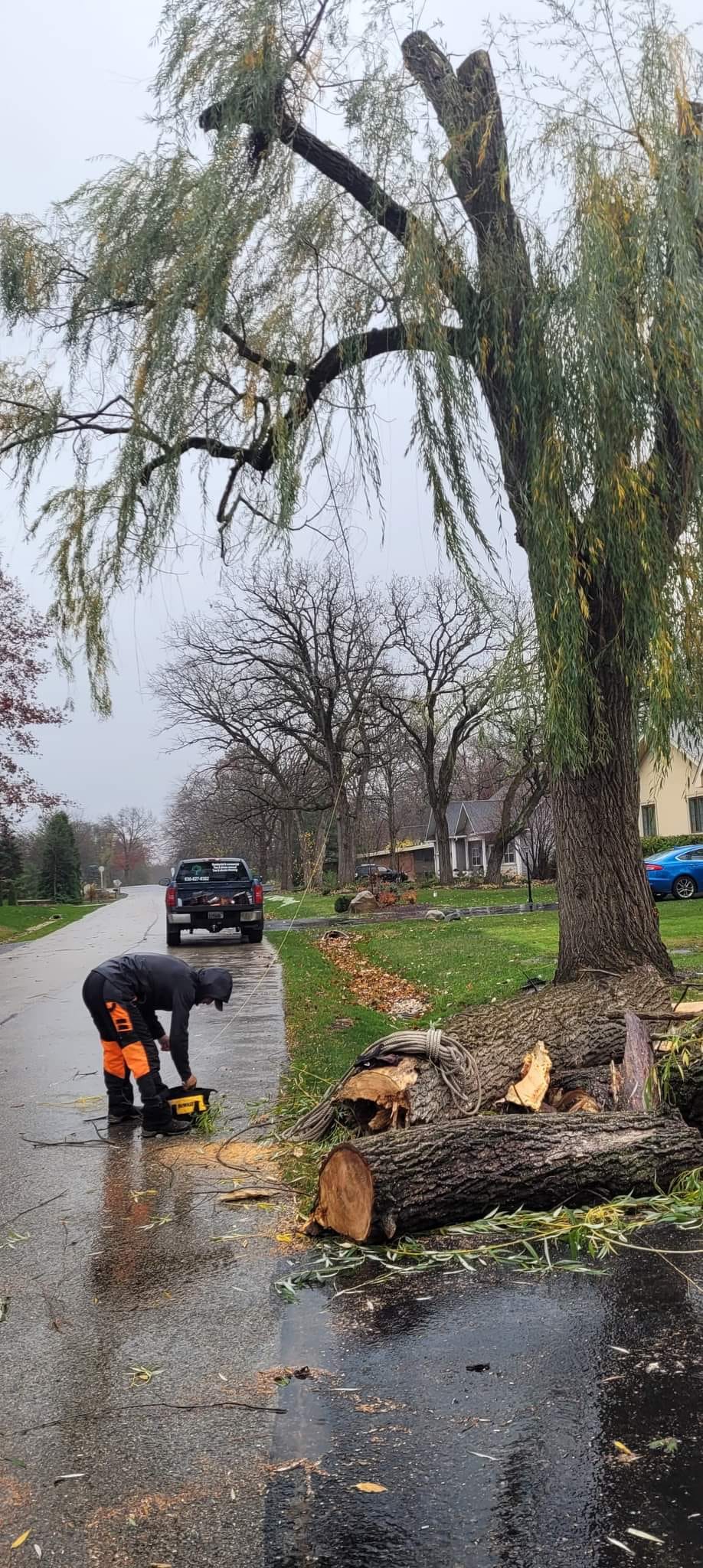
A leaning tree is one of the most common reasons homeowners call about safety, and for good reason: a tree that is tipping over looks like a tree about to fall. But a lean by itself is not a verdict. Plenty of perfectly stable trees have leaned the same way for their entire lives and will keep standing for decades. Other trees with only a slight tilt are in the early stages of a root failure that will bring them down in the next storm. The skill is in telling those two situations apart, and the difference comes down to whether the lean is old and settled or new and progressing.
Start with the distinction between a natural lean and a developing one. A natural lean is one the tree grew into over many years, usually reaching toward light at the edge of a canopy or away from a building or another tree. The telltale sign is the trunk itself: a naturally leaning tree often has a gentle curve, with the upper trunk bending back toward vertical, and the base sits firmly in undisturbed, level soil. The tree has built its wood and root system around that lean and is mechanically balanced for it. These trees are usually stable, and the lean is simply their form.
A developing lean is a different and more serious thing, because it means the tree is moving relative to the ground rather than having grown that way. The clues are at the base, not in the canopy. Look for soil that is cracked, heaved, or mounded on the side opposite the lean, which happens as the root plate begins to lift. Look for roots that are exposed or torn on the lean side, a gap opening between the trunk base and the soil, or a trunk that meets the ground at a sharp, straight angle rather than flaring naturally into the roots. A tree that has visibly increased its lean over a season, or did so suddenly after a storm or saturated soil, is the clearest warning of all.
Recent changes around the tree raise the stakes on any lean. Construction that cut roots on one side, a grade change that buried or exposed the root flare, the removal of neighboring trees that used to shelter it from wind, or a stretch of heavy summer irrigation that softened the soil can all tip a previously stable tree toward failure. Saturated soil is a particular concern, because roots anchor far less well in wet ground; a tree that stands fine through a dry summer can lean and go over when the soil is soaked and the wind comes up. The history of the site matters as much as the angle of the trunk.
There are a few quick observations a homeowner can make before calling anyone. Sight the trunk against a vertical reference like a building corner or a fence post and note the angle, then check it again after a few weeks or after a storm to see whether it is moving. Walk the base and look for the soil heaving and root signs described above. Note whether the lean is toward or away from anything that matters, a house, a driveway, a play area, or a road. Photograph the base and the trunk angle so you have a baseline to compare against. A lean that is stable over time and sits in firm soil is far less worrying than one that is changing.
When a lean does warrant action, the response depends on the cause and the target. A young tree leaning from poor staking or wind can sometimes be corrected and properly supported while it establishes. A mature tree with a stable, long-standing lean over an open area may simply need monitoring and perhaps some weight reduction to lower the load. A mature tree with signs of active root failure, especially over a target, is the situation where removal often becomes the safe answer, because once the root plate is lifting there is rarely a reliable way to re-anchor a large tree.
What a homeowner cannot easily judge is the condition of the roots underground, which is the single most important factor in whether a lean is safe. Surface signs help, but the root system's health, the extent of any decay, and the soil's holding capacity take a trained assessment to evaluate, sometimes with probing or a closer look at the root flare. That is why a leaning tree over something you care about is worth a professional eye rather than a guess, in either direction: people both ignore dangerous leans and remove harmless ones.
If a tree on your property leans, the useful first step is to read the base and track whether the lean is changing. A settled, curved tree in firm soil is usually just shaped that way. A tree with heaving soil, torn roots, a fresh or worsening tilt, especially after wet weather, is telling you something is failing at the foundation. When the lean is over a target or the base shows those warning signs, an arborist can determine whether the tree is stable, can be supported, or has reached the point where removal is the responsible call before the next storm makes the decision for you.
Need tree service?
Klein Creek Tree Care LLC helps residential and commercial properties with trimming, pruning, removals, tree health assessments, and safety-focused maintenance.