Reading a Tree's Spring Leaf-Out for Clues
The pattern of how a tree leafs out in spring tells you more about its overall health than almost any other single observation in the year.
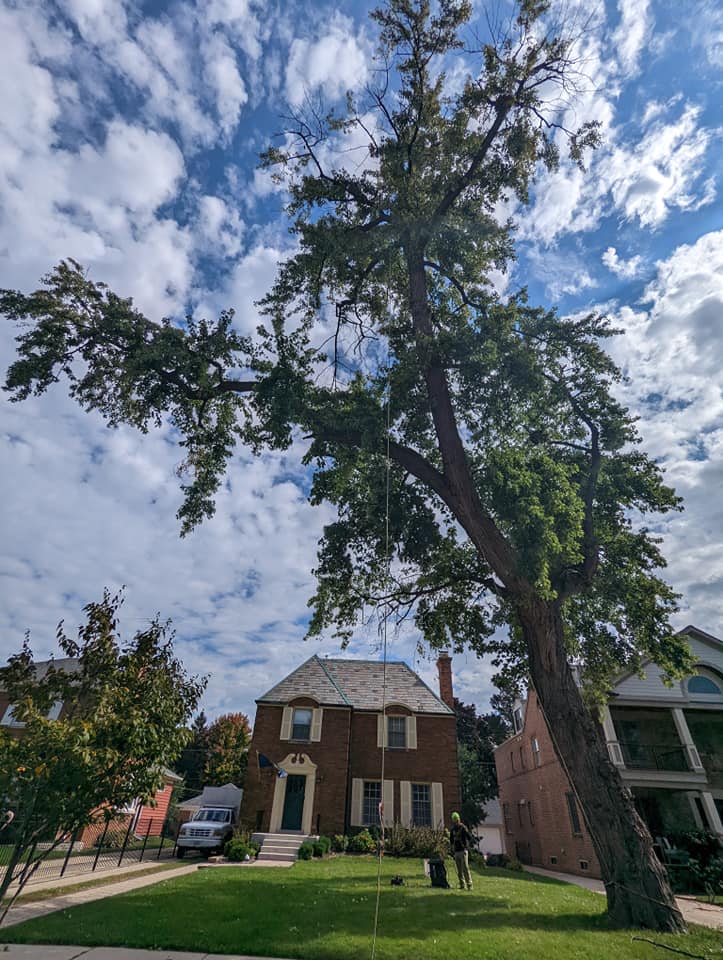
Spring leaf-out is the closest thing trees have to a yearly physical. The way a canopy fills in, where the leaves come out first, where they come out late, and which areas of the tree skip the process entirely is information that any homeowner can read with a little practice. It is also information that an arborist would charge to evaluate, so learning to look at it yourself pays off the first time.
The first thing to pay attention to is timing relative to other trees of the same species. Walk down the block and compare. A tree that leafs out a week or two later than its neighbors is mildly behind. A tree that leafs out three to four weeks later, or only partially, is sending a signal. Late or uneven leaf-out is one of the earliest visible symptoms of stress in the root zone, the trunk, or both, and it often shows up a full season before any other obvious problem.
The next thing to look at is the distribution of leaves across the canopy. A healthy tree fills in fairly evenly, with the upper third often slightly behind the lower portions but catching up quickly. Trees in decline tend to leaf out from the bottom up and never quite complete the process at the top. A canopy that is full in the lower branches but sparse, stick-like, or completely bare in the upper crown is the classic look of crown dieback, and the cause is almost always either root damage or main-trunk damage that has reduced the tree's ability to push water and sugars all the way up.
Look at leaf size too. Many homeowners only check whether leaves are there at all, but a tree that leafs out completely with leaves that are noticeably smaller than they should be is in a different category than a tree skipping branches. Small leaves on a normal flush usually point to chronic stress, like drought damage from a previous summer, root loss from construction, or compaction that has been building up. Big, normal leaves on a normal flush say the tree had the reserves it needed.
Patchy leaf-out within the canopy is its own diagnostic. If one side of the tree is fully leafed out and the other side is bare or sparse, that asymmetry usually points to either damage on the lighter side or root loss under that side. A storm broke a major scaffold limb a year ago and that side never fully recovered. A trench was cut through the root plate two years ago on the side that is now thinning. Knowing which event matches which symptom helps you and an arborist make better decisions about pruning and load reduction.
Color is the next layer. Pale, yellow, or off-color leaves at the time of full leaf-out can point to nutrient issues, especially iron or manganese deficiency on certain soils, or to root problems that are limiting nutrient uptake. Some species naturally leaf out with a slight color tint that fades to green over a few weeks, so it helps to know what the tree should look like at the same point last spring before assuming the color is a warning.
The single most useful homeowner habit on this front is taking a photo of each significant tree on the property at the same point each spring, from roughly the same angle. Year-over-year comparison turns a vague impression of "the tree looks a little thin" into a concrete observation: this year the top is noticeably less full than last year, the south side is less full than the north side, the leaf-out is two weeks behind the same date a year ago. That kind of comparison is exactly what catches problems early enough that pruning, soil work, or planning a replacement is still cheap.
If a tree looks meaningfully different this spring than it did last spring, that is worth a closer look. Most of the time the cause is something benign, and the answer is reassurance or a small adjustment to care. Sometimes the cause is real, and catching it now buys options that catching it in two years will not.
Need tree service?
Klein Creek Tree Care LLC helps residential and commercial properties with trimming, pruning, removals, storm cleanup, and safety-focused maintenance.