Mid-Summer Canopy Thinning: When and Why To Do It
Canopy thinning is one of the most misunderstood pruning operations. Here is when mid-summer thinning helps a tree, when it hurts, and how it is done correctly.
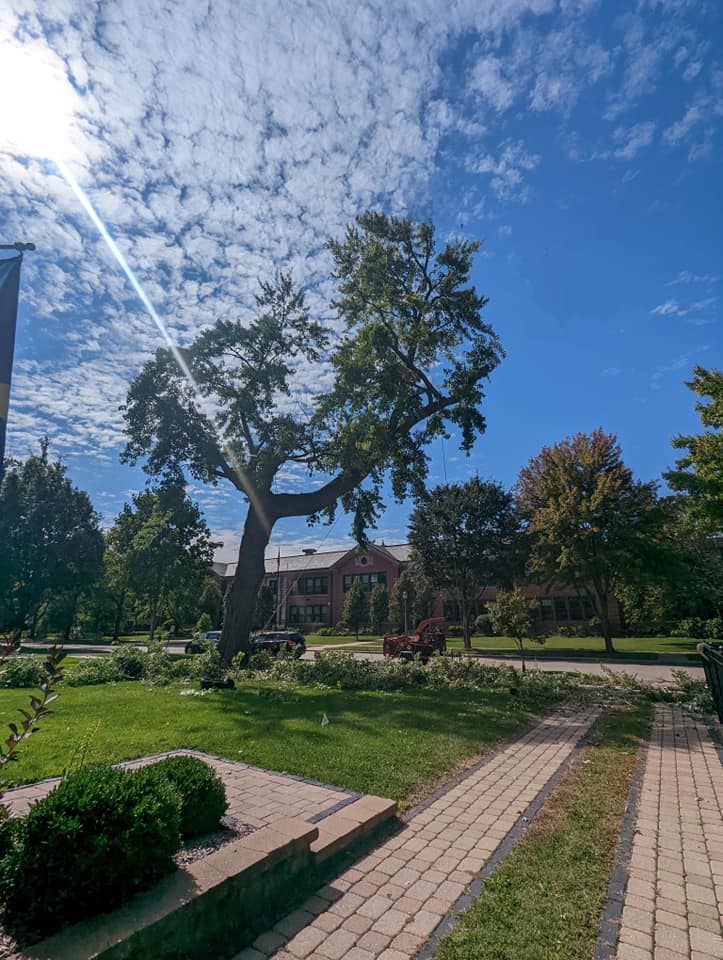
Canopy thinning is one of those terms that gets used a lot and explained poorly. Done right, it improves the long-term health and safety of a tree. Done wrong, it stresses the tree, encourages weak regrowth, and can shorten the life of an otherwise healthy specimen. The difference is mostly about timing, technique, and how much foliage actually comes off in a single visit.
The goal of thinning is to open up the inside of the canopy so light and air can move through it. A dense canopy holds humidity against the leaves and inside the branch structure, which encourages fungal disease and gives sucking insects a sheltered environment to multiply. It also catches more wind, increases the weight on outer limbs, and makes branch failure more likely during summer thunderstorms. Selectively removing crossing branches, weak attachments, suckers, and a portion of the smaller interior limbs solves several of these problems at once.
Mid-summer is a useful window for thinning because the tree has finished its strongest growth push and can clearly show which branches are overloaded, which are diseased, and which are crowded. By late June or July, dead branches are obvious against the green canopy, water sprouts and suckers have shown themselves, and the structural shape of the tree is fully expressed. That visibility makes it much easier to choose the right cuts. It is also a quieter time for most insect and fungal activity than early spring, which can reduce the risk of disease transmission through fresh cuts on susceptible species like oaks.
The hard limit on mid-summer thinning is volume. A common mistake is to confuse thinning with lions-tailing, which is the practice of stripping the interior of a limb and leaving foliage only at the tip. Lions-tailing looks neat, but it concentrates wind load at the end of the branch, removes the leaves that feed the inner wood, and almost guarantees future failure. Real thinning removes scattered small branches throughout the canopy and never strips a single limb bare. As a working rule, no more than fifteen to twenty percent of the live canopy should come off in one season, and less than that on mature trees that are already under stress.
Some trees should not be thinned in mid-summer at all. Species prone to oak wilt or sap-loving beetles, freshly transplanted trees, trees with visible drought stress, and trees recovering from recent storm damage all do better with thinning deferred to a more appropriate window. A health assessment before the cuts go in is the safest way to avoid making a problem worse.
When thinning is appropriate, the results are usually visible right away. Light dapples the ground under the tree instead of pooling in deep shade. Wind moves through the canopy instead of pushing against it. Lower branches stop dying back from lack of light, and the tree looks balanced rather than top-heavy. It is one of the few pruning operations that genuinely makes a tree healthier when it is done correctly, which is exactly why getting the timing and the technique right matters so much.
Need tree service?
Klein Creek Tree Care LLC helps residential and commercial properties with trimming, pruning, removals, tree health assessments, and safety-focused maintenance.