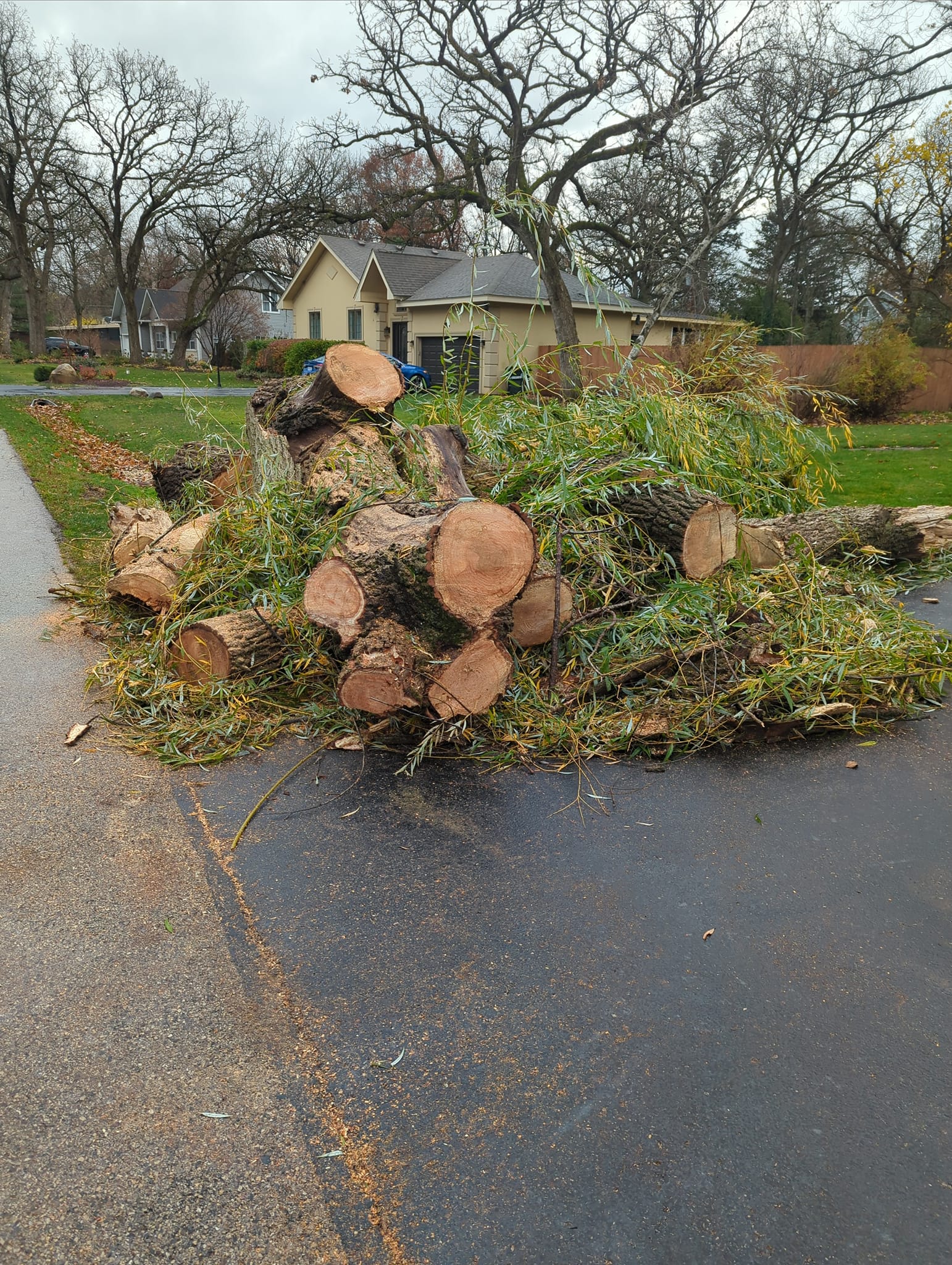
Late-Summer Tree Inspection in Wheaton Before Winter Weather
Late summer is an excellent time to understand how a tree handled the growing season. By August, drought stress, thin foliage, dead branch tips, insect injury, and structural weaknesses are easier to see. In Wheaton, that information is valuable before winter wind, snow, and ice place additional load on the canopy. The goal is not to remove every imperfect branch. It is to identify concerns early and prioritize work that improves safety and long-term health.
Begin from the ground and look at the whole tree. Check whether the trunk widens naturally into a visible root flare, whether mushrooms or decay are present near the base, and whether soil has been piled against the bark. Walk around the canopy and note dead limbs, hanging branches, cracks, cavities, and weak unions between large stems. Pay special attention to branches over roofs, driveways, sidewalks, play areas, and neighboring property because the consequence of failure is greater there.
Foliage provides another set of clues. Early color, unusual leaf drop, scorched edges, sparse sections, or a sudden change on one side may reflect water stress, root disturbance, pests, disease, or branch damage. The pattern matters, and a professional can distinguish a seasonal response from a progressive problem. Irrigation and mulch should also be reviewed. A broad, shallow mulch ring conserves moisture, while deep mulch against the trunk creates damp conditions and can hide defects.
Pruning should follow a clear objective. Dead or broken limbs and specific structural risks may justify timely work, but heavy late-season pruning can remove too much live foliage and stimulate responses the tree does not need before winter. Correct cuts at suitable branch unions preserve the tree's natural form. Topping, stripping interior growth, or making flush cuts creates new stress and often produces weaker growth later.
An inspection is also a chance to plan rather than react after a storm. Some findings need prompt correction, others can be monitored, and routine pruning may be scheduled for the season best suited to the species. Photographs and notes provide a baseline for future comparison. For Wheaton homeowners, a measured late-summer review can reduce surprises, protect valuable mature trees, and make winter tree care more deliberate.
If a tree has major cracks, recent leaning, lifting soil, hanging limbs, or contact with utility lines, keep people away and seek qualified help. Utility conflicts require the appropriate utility coordination. Klein Creek Tree Care can assess accessible tree concerns, explain priorities, and recommend a practical scope that supports both safety and the health of the tree.