Identifying Construction Damage on Existing Trees
Construction near a mature tree causes more damage than most homeowners realize. The signs often take a year or two to show up.
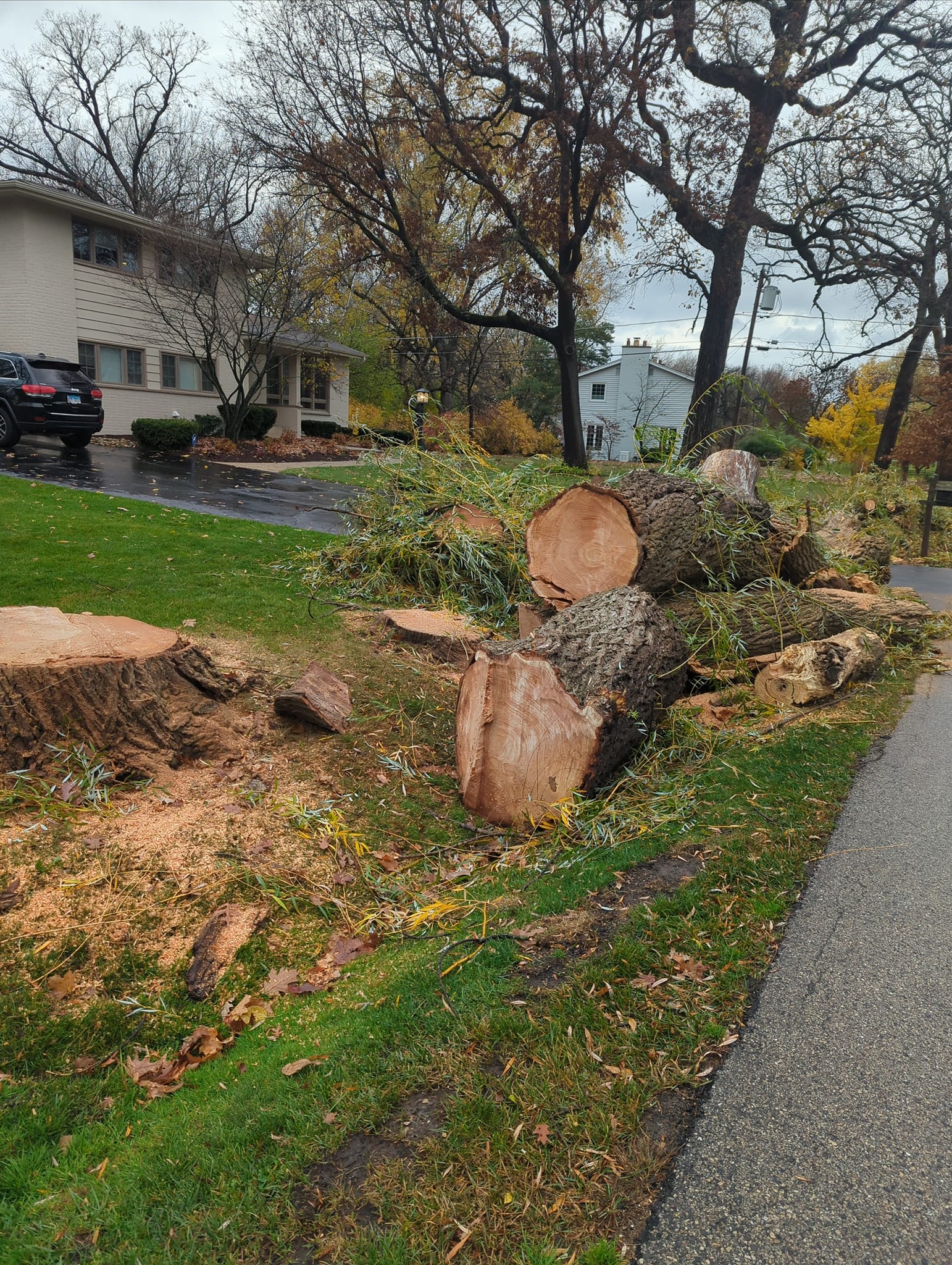
The trees most likely to fail over the next decade on a residential property are not the ones that look bad right now. They are the ones that lived through a remodel, an addition, a new driveway, or a fence replacement at some point in the last few years. Construction damage is one of the leading causes of long-term decline in mature trees, and most of it is invisible the day the contractor packs up and leaves.
The biggest damage usually happens to the root system, where homeowners cannot see it. The structural roots that anchor a mature tree spread out two to three times the radius of the canopy, mostly within the top eighteen inches of soil. Anything that compacts, cuts, or buries that zone has direct consequences for the tree. Repeated equipment traffic, even from a small skid steer or a loaded wheelbarrow, can squeeze enough air out of the soil that fine root function drops by half. Trenching a utility line through the root plate cuts more roots than people expect. Even raising or lowering grade by a few inches changes the depth roots are operating at and can suffocate them slowly.
The visible signs of construction damage almost always come later. In year one, the tree may look fine. By the second growing season, leaf size starts to shrink. The canopy may not fill in fully at the top. Smaller branches at the ends of the limbs die back. Mushrooms or other fruiting bodies may appear at the base, sometimes for the first time ever. Bark can begin to look loose, and a previously healthy tree may show a noticeable thinning that does not improve with watering. By the time the homeowner realizes something is wrong, the cause is three years in the past and very hard to reverse.
Above-ground damage is easier to spot but easier to ignore. Look for fresh wounds on the trunk where equipment grazed the bark, dripping resin or sap, splits in major branches from things being staged against the tree, and any cut that did not heal cleanly. A scrape that exposes a few square inches of cambium is more serious than it looks, especially low on the trunk where it disrupts the flow of sugars from the canopy to the roots. Several of those wounds together, or a single large one, can drive long-term decline on a tree that survived the construction otherwise.
If a project is currently planned and the trees have not been hurt yet, the cheapest intervention by far is a tree protection plan before anything starts. That means clearly fencing off the critical root zone, ideally to the dripline or beyond, and keeping it off limits to material storage, equipment, and even foot traffic. Crews working with proper tree protection do not park trucks under the canopy, do not stack lumber against the trunk, do not wash concrete near the roots, and do not trench through the root plate without an arborist consulted on the routing. The fence is the cheapest piece of insurance available, and it works almost every time it is actually respected.
If the damage has already happened, the next step is honest evaluation rather than aggressive intervention. Avoid the temptation to immediately fertilize, deep-water, or aerate without an arborist looking at the tree. Some of those steps help. Others, applied at the wrong time, add stress on top of stress. A good evaluation looks at exactly which roots were lost, how much of the canopy responded, and what the realistic future of the tree is. Sometimes the right answer is targeted pruning to balance the load against the reduced root system. Sometimes it is monitoring for two seasons. Sometimes it is planning a removal before the tree fails on its own timeline.
Construction damage is the kind of problem that is almost impossible to fix and very easy to prevent. If you are planning any work on the property that involves digging, grading, parking, or staging within reach of a tree, the time to call an arborist is before the contractor arrives. A short site visit, a tree protection fence, and a clear plan for utility routing protect the trees on the property far more effectively than anything that can be done after the fact.
Need tree service?
Klein Creek Tree Care LLC helps residential and commercial properties with trimming, pruning, removals, storm cleanup, and safety-focused maintenance.