Fall Needle Drop on Evergreens: Normal Shedding or a Problem?
Yellow needles inside an evergreen can look alarming in October. Where they are on the tree tells you whether it is normal shedding or something that needs attention.
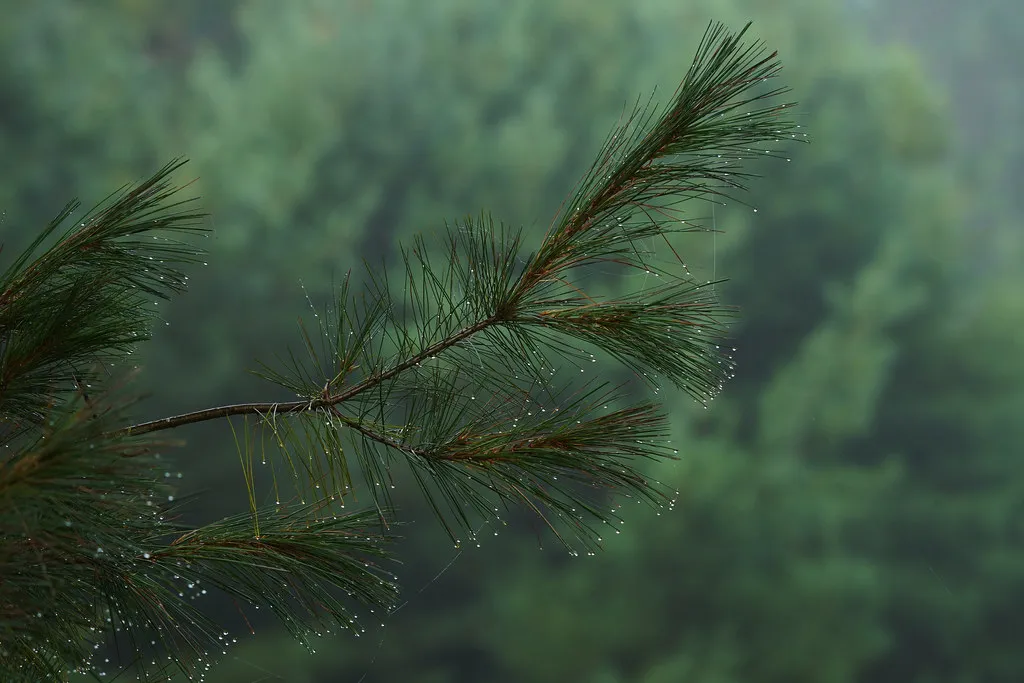
Every fall, homeowners notice pine trees and arborvitae that seem to be dying. The inside of the tree has turned yellow or brown, and needles are piling up underneath. In many cases nothing is wrong. Evergreens do not keep their needles forever. They replace them gradually, and the oldest needles drop each year, usually in late summer and fall. Knowing what normal shedding looks like makes it much easier to recognize the cases that do need a closer look.
Seasonal needle drop follows a pattern. The yellowing needles are the oldest ones, found toward the inside of the tree and on the inner part of each branch, while the newest growth at the branch tips stays green. The color change is fairly even across the tree rather than concentrated on one side or in one section. White pines are known for dramatic shedding and can turn noticeably yellow inside before dropping their older needles over a few weeks. Arborvitae shed older interior foliage as brown sprays, and in some years the amount is heavy enough to alarm an owner who has not seen it before. Spruces and firs hold their needles longer, and their interior shedding is usually less obvious.
The amount varies from year to year. After a hot or dry summer, a tree may let go of more old foliage than usual, and the fall drop looks heavier as a result. A heavy year is not a reason for concern on its own, as long as the new growth at the tips looks healthy and next spring's shoots develop normally.
Needle loss is more likely to be a problem when it breaks that pattern. Watch for browning that starts at the branch tips or on new growth, needles dropping from the current year's shoots, whole branches turning brown, one side of the tree affected far more than the other, or a dying top. Look closely at the needles, too. Bands, spots, or rows of tiny black dots can indicate fungal disease, and white, crusty resin on the bark of a spruce branch can be a sign of canker. Thin, sparse growth year after year is another clue, even if the color looks acceptable.
In the Chicago suburbs, a few evergreen problems come up often. Colorado blue spruce, planted far from its native climate, frequently struggles with needle cast diseases and canker, which typically show as lower branches losing needles and dying from the bottom up. White pines can decline in heavy, poorly drained clay and are sensitive to road salt spray. Arborvitae and yews planted too deep or in soggy spots can decline from root problems. Evergreens near driveways and streets may brown on the side facing the pavement after a salty winter, though that damage shows up in spring rather than fall.
Start by noting where the yellow or brown needles are and photographing the tree from a couple of angles. Check the new growth at the branch tips; if it looks green and healthy, normal shedding is the likely explanation. Water evergreens deeply before the ground freezes if the fall has been dry, since they keep losing moisture all winter. Avoid shearing or heavily pruning a stressed evergreen in fall, and hold off on fertilizing a tree whose symptoms you have not identified.
Some evergreen problems are manageable, especially when caught early, and some are not. A spruce that has already lost much of its lower foliage will not grow it back, and years of treatment for a tree poorly suited to its site may not be the best use of money. Knowing the cause helps you choose between care, patience, or planning a replacement with a species that fits the spot better.
If your evergreen's needle loss does not look like the normal pattern, or you are not sure, Klein Creek Tree Care can take a look. We evaluate tree health for homeowners and properties in Wheaton, Glen Ellyn, and nearby communities, and can tell you whether the tree is simply shedding for the season or needs care, pruning, or a longer-term plan.
Evergreen looking thin this fall?
Klein Creek Tree Care LLC provides tree health evaluations for evergreens and shade trees in Wheaton, Glen Ellyn, and surrounding communities.