Black Knot on Cherry and Plum Trees: Spot It Now, Prune It This Winter
Once the leaves are down, black knot is hard to miss: rough black swellings on the branches of cherry and plum trees. Pruning it out over the winter keeps it from spreading.
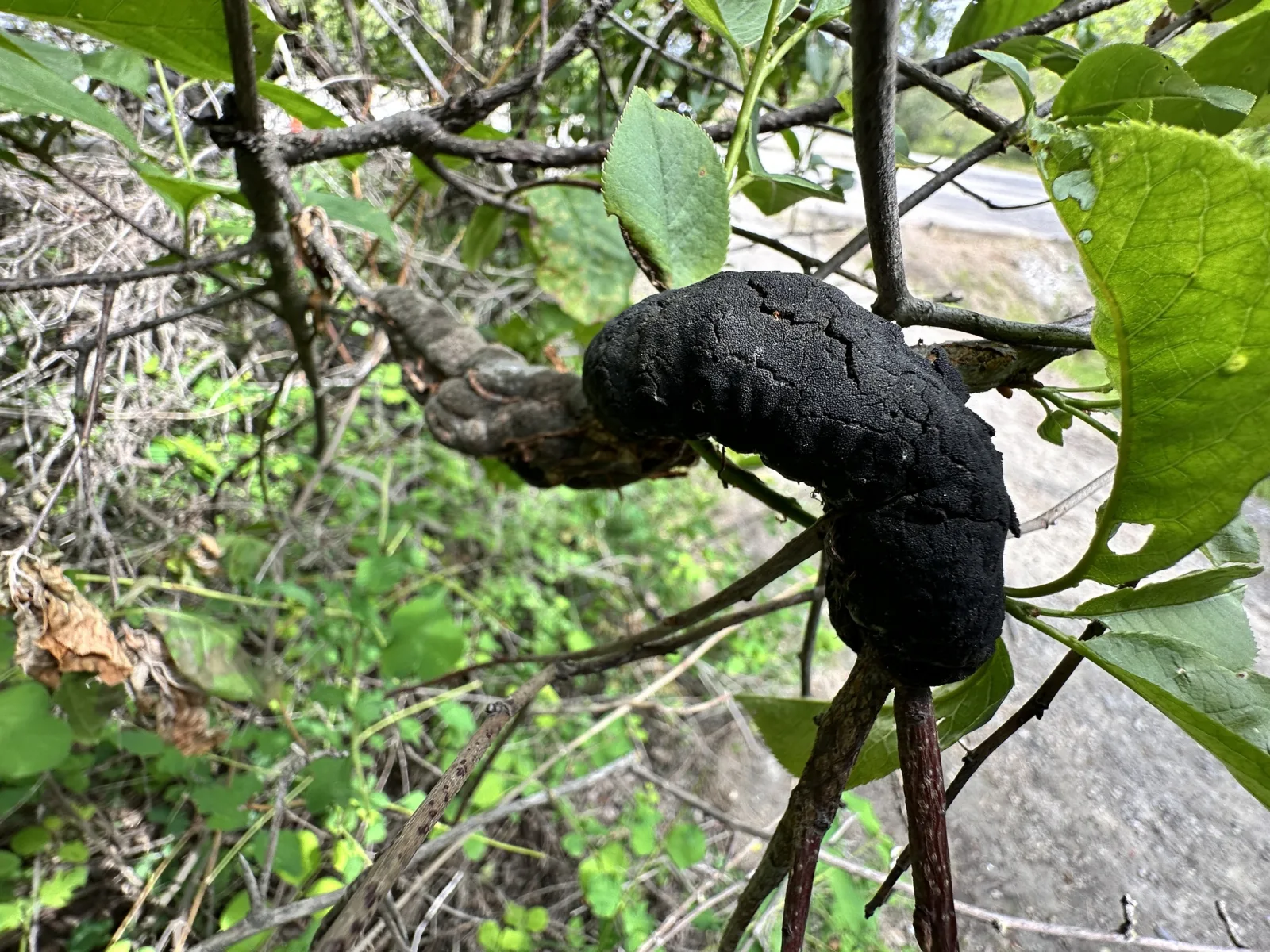
Cherry and plum trees are common in Wheaton-area yards, from fruiting cherries to purple-leaf plums and flowering ornamental cherries. Many of them share the same problem, a fungal disease called black knot. In summer the leaves hide it. In November, with the branches bare, it is easy to see, and the next few months are the right time to deal with it.
Black knot looks like rough, coal-black swellings along twigs and branches, ranging from less than an inch to several inches long. Young knots are softer and olive-green. They harden and turn black as they age, and older knots may be dotted with white or pink mold or bored by insects. Knots often form on one side of a branch, and they grow a little larger each year until they can girdle the branch and kill everything beyond them.
The disease is caused by a fungus that infects new shoots in spring. During wet weather around bloom time, mature knots release spores that rain and wind carry to fresh growth. The infection does not show right away. A slight swelling may appear later that season or the following spring, and it usually takes until the second year for the knot to turn black and start producing spores of its own. That delay means a tree often has more infections than you can see.
Wild cherries and plums growing along fence lines, woodlots, and rail lines are a common source. Chokecherry and wild black cherry are frequently covered in knots. If those trees grow near your yard and are heavily infected, expect new infections on your own trees to keep turning up.
The dormant season, from now until the buds swell in early spring, is the time to prune. Cut each infected branch 4 to 8 inches below the visible edge of the knot, into clean wood, because the fungus extends beyond the swelling. Make the cut back to a side branch or just outside the branch collar instead of leaving a stub. Wipe your pruners or saw with rubbing alcohol between cuts. Where one branch carries several knots, it is often simpler to remove the whole branch. On a small tree, avoid taking off more than about a quarter of the canopy in one winter. If the infection is that widespread, have the tree looked at before you start cutting.
Do not leave pruned knots lying on the ground or in a brush pile near the tree. Cut-off knots can still release spores the following spring. Bag them and remove them from the property.
Pruning has limits. Knots on the main trunk or on large scaffold limbs cannot be cut out without damaging the tree's structure. A small ornamental tree with knots on the trunk, getting worse year after year, may not be worth keeping, and replacing it with a species that is not a cherry or plum may be the better choice. Spring fungicide sprays exist, but they only help alongside pruning and depend on careful timing.
Klein Creek Tree Care offers pruning and tree health assessments for homeowners in Wheaton, Glen Ellyn, and surrounding communities. If you are seeing black swellings on a cherry or plum this fall, request an estimate and we can help you decide whether the tree should be pruned this winter or replaced.
Seeing black knot on your trees?
Klein Creek Tree Care LLC provides dormant-season pruning and tree health assessments in Wheaton, Glen Ellyn, and surrounding communities.