Bark Inclusions in Multi-Trunk Ornamental Trees: A Summer Inspection Guide
The clumped, multi-trunk ornamentals that look so good in a landscape are also the ones most prone to splitting at the base. Here is how to inspect them for bark inclusions before a summer storm finds the weak point.
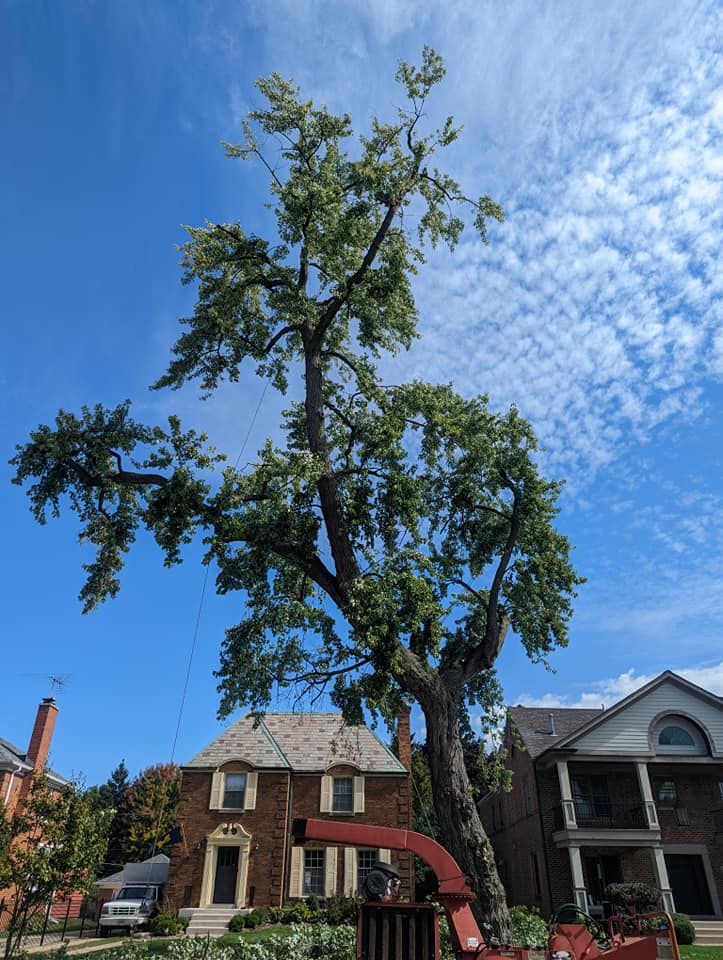
Multi-trunk ornamental trees, the clumped birches, crepe myrtles, maples, and other species sold with three or more stems rising from a single base, are landscape favorites for a reason. They have a graceful, full form, they fit smaller spaces than a single large shade tree, and they create an instant focal point. What sells them is also what makes them prone to a specific structural failure: the tight, crowded unions at the base where those multiple stems meet are exactly the geometry that traps bark and forms weak joints. Summer, with its storms and its fully leafed canopy weight, is when those weak joints get tested.
The problem comes down to how those stems are attached. When two or more trunks of similar size rise close together from the same point, the union between them is often a tight, narrow V rather than a strong, open U. In a tight V, the bark of each stem grows toward the other and gets pinched in the seam instead of the wood fusing across the joint. That trapped, dead bark is called included bark, and it means the stems are not truly joined; they are pressed against one another with a weak layer in between. On a multi-trunk tree where several stems share one crowded base, this is the rule more than the exception.
The reason this matters more on ornamentals than it might first appear is the weight each stem carries. By midsummer every trunk is supporting a full load of foliage, and after a rain that foliage is heavy with water. A storm gust, or even just the accumulated static load on a hot day, pushes the stems apart at the base. Where the union is sound, they flex and hold. Where bark is included, the seam can simply open and a whole trunk peels away from the clump, often taking a third or more of the tree with it and tearing a long wound down into the base. On a focal-point ornamental near an entry or a patio, that is both a safety and a landscape loss.
Inspecting for the defect from the ground is something any homeowner can learn. Walk up to the base of a multi-trunk tree and look closely at each point where two stems meet. A reassuring union is wide and open, with a raised ridge of bark, the branch bark ridge, pushing up out of the crotch. A concerning union is a tight seam where the stems run nearly parallel, often with a dark line, a crack, or a pocket where leaves and water collect. Run a finger into the crotch: if it dives into a deep, narrow slot rather than meeting a firm ridge, bark is likely included. Check every union on the clump, not just the most obvious one.
Look for the secondary signs that a weak union is already moving. A vertical crack running down from the union, a section of stems that has begun to spread wider apart than the others, bark that is cracked or bulging at the seam, or a stem that leans away from the clump more than it used to are all signs the joint is under stress. On a tree that has already lost one stem to splitting, the remaining unions deserve particular suspicion, because they share the same crowded geometry and the same vulnerability.
The good news is that multi-trunk ornamentals respond well to early management. On a younger tree, an arborist can reduce the weight on the stems with included bark, shortening them so the leverage on the weak union drops, which buys the tree years. For valued specimens with a worth-saving form, a flexible cable installed higher in the stems can limit how far they spread apart in a storm while still allowing natural movement. Cabling is specialized work that needs proper installation and periodic inspection, not a one-time fix, but it can keep a beautiful clumped tree standing that would otherwise have to be reduced hard or removed.
What to avoid is the reflexive heavy topping that some crews suggest for a top-heavy ornamental. Cutting the stems back to stubs triggers a flush of weak regrowth and does nothing to fix the union at the base, which is where the real risk lives. The right approach is targeted weight reduction on the problem stems, sound support where the tree is worth preserving, and honest assessment of which unions are too far gone to save. Reduction made back to live laterals keeps the tree's character; stubbing it does not.
If you have a clumped, multi-trunk ornamental as a centerpiece of your landscape, the calm of midsummer is a good time to inspect the base unions before the next storm tests them. These trees earn their place, but their weak point is structural and predictable, and the failures tend to come at the worst time over the spots people use most. A professional evaluation can tell you which unions are sound, which need weight taken off, and which warrant support, so the tree that anchors your yard stays both attractive and safe through the season.
Need tree service?
Klein Creek Tree Care LLC helps residential and commercial properties with trimming, pruning, removals, tree health assessments, and safety-focused maintenance.